Welcome To Hebei Xiongan Hengyun Technology Co., Ltd.
 Esperanto
 Shqiptare
 Euskara
 Zulu
Zulu
 Latinus
 Cymraeg
 தமிழ்
தமிழ்
 Slovak
 Slovak
 Afrikaans



Fiberglass Roving: The Fundamental Building Block of Modern Composite Materials
2026-07-06


Technical Overview
Fiberglass roving is a fundamental industrial material consisting of continuous glass filaments gathered into untwisted bundles. Unlike traditional yarns, roving is characterized by its untwisted construction, which enables rapid and thorough impregnation by liquid resins during composite manufacturing. This combination of high tensile strength, lightweight properties, and cost-effectiveness makes it the preferred reinforcement material for countless applications across aerospace, automotive, construction, and renewable energy industries.
Manufacturing Process and Material Composition
The production of fiberglass roving begins with molten glass drawn through fine bushings to form continuous filaments. These filaments are gathered into "ends" and coated with a sizing agent — a chemical formulation containing silane-based coupling agents and polymeric binders. The sizing serves multiple critical functions: it protects the fragile glass filaments during handling, ensures compatibility with specific resin systems, and promotes strong adhesion between the glass fibers and the polymer matrix.
Roving products are classified into two primary categories. Direct roving consists of filaments gathered from a single bushing and wound directly onto a package, producing a product with a flatter filament cross-section for enhanced processing characteristics. Assembled roving combines multiple ends from several forming packages, typically containing thirty to sixty ends per bundle, and is widely used in spray-up, filament winding, and pultrusion processes.
Key Performance Characteristics
The technical value of fiberglass roving lies in its balanced combination of properties. Filament diameters typically range from ten to fifteen microns, providing the flexibility needed for various manufacturing methods while maintaining excellent reinforcement efficiency. The material's strength-to-weight ratio is particularly significant — tensile strength values make it suitable for demanding structural applications where metal components would be prohibitively heavy.
The untwisted nature of roving ensures rapid wet-out, allowing resin to penetrate the fiber bundle quickly and completely. This characteristic, combined with multi-resin compatibility — including unsaturated polyester, vinyl ester, epoxy, and phenolic systems — enables manufacturers to select the optimal roving variant for their specific process requirements.
The application spectrum of fiberglass roving continues to expand as industries pursue lightweighting and sustainability goals. In transportation, roving-reinforced composites replace heavier metals in automotive components including instrument panel carriers, door modules, roof panels, seat frames, and battery trays. These lightweight parts contribute directly to improved fuel efficiency and reduced emissions.
In the renewable energy sector, large wind turbine blades depend on fiberglass roving for their structural integrity. The material's combination of strength and light weight enables the production of longer, more efficient blades while maintaining manageable manufacturing and transportation costs.
The construction industry employs fiberglass roving in corrosion-resistant rebar, bridge decks, and pipelines where traditional steel would be vulnerable to environmental degradation. The material's chemical resistance ensures long service life even in harsh conditions. Additional applications include pressure vessels, chemical storage tanks, marine vessels, and sporting goods.
Process Compatibility and Advancements
Fiberglass roving is processed through several established composite manufacturing methods. Filament winding produces pipes, pressure vessels, and cylindrical structures by winding resin-impregnated roving around a rotating mandrel. Pultrusion continuously draws roving through a resin bath and heated die to manufacture constant-cross-section profiles such as FRP doors, window frames, and structural beams. Spray-up involves chopping roving in a specialized gun and spraying it with catalyzed resin directly onto a mold, commonly used for producing bathtubs, boat hulls, truck caps, and spa shells.
Technological innovations continue to enhance roving performance. Advanced sizing formulations improve adhesion to emerging resin systems while reducing void content in finished composites. Manufacturers such as Owens Corning, Jushi Group, and Nitto Boseki are expanding production capacity for high-performance roving grades that meet the demanding requirements of wind energy, aerospace, and AI-related infrastructure applications.
Conclusion
Fiberglass roving serves as the foundational reinforcement material enabling modern composite engineering. Its unique combination of mechanical strength, chemical resistance, processability, and cost-effectiveness has established it as an indispensable industrial commodity. As global industries intensify their pursuit of lightweight, durable, and sustainable solutions, fiberglass roving remains at the forefront of materials innovation — quietly reinforcing the structures, vehicles, and energy systems of the modern world.
Fiberglass roving,Composite reinforcement,Filament winding,Pultrusion,Sizing agent,Tensile strength,Lightweight
Related news
Fiberglass Roving: The Fundamental Building Block of Modern Composite Materials
2026-07-06

Fiberglass Mesh: The Invisible Reinforcement Backbone of Modern Construction and Infrastructure
2026-07-03
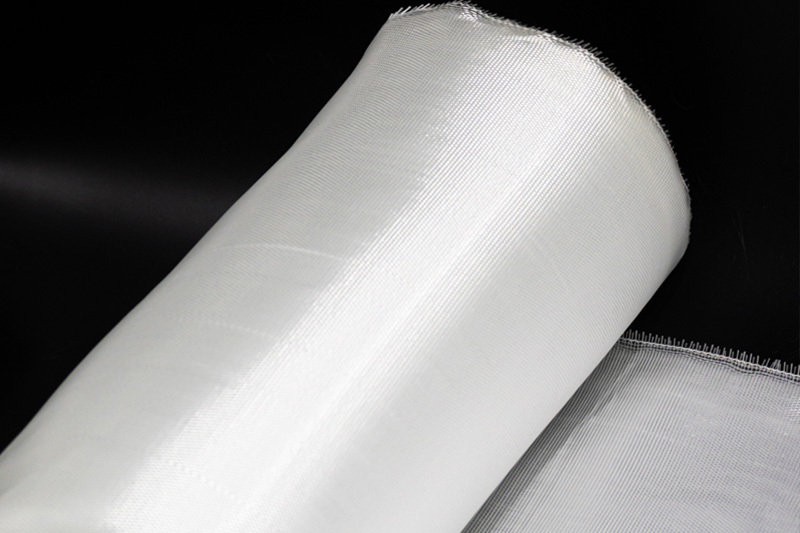
7628 Electronic Fiberglass Cloth: The Engineered Fabric Powering Modern PCB Performance
2026-07-01

We produce building materials with glass fiber as the main product.Production headquarters is located in Xiongan New District.


Contact
Room 209, Building S6, 001 Baojing Road North, xiongxian, Baoding, Hebei

Learn more