Welcome To Hebei Xiongan Hengyun Technology Co., Ltd.
 Esperanto
 Shqiptare
 Euskara
 Zulu
Zulu
 Latinus
 Cymraeg
 தமிழ்
தமிழ்
 Slovak
 Slovak
 Afrikaans



Fiberglass Mesh: The Invisible Reinforcement Backbone of Modern Construction and Infrastructure
2026-07-03


Technical Overview
Fiberglass mesh, also known as glass fiber reinforcing mesh, is a high-performance engineering textile that has become an essential component in modern construction, infrastructure, and industrial applications. Unlike conventional woven fabrics, fiberglass mesh is specifically engineered to provide dimensional stability, crack resistance, and mechanical reinforcement to composite systems. Its unique combination of high tensile strength, chemical resistance, and lightweight flexibility makes it the material of choice for reinforcing cementitious, plaster, and polymer-based systems across diverse environments.
The fundamental value of fiberglass mesh lies in its ability to absorb and distribute mechanical stresses throughout a composite structure. When embedded within a matrix—such as plaster, concrete, or mortar—the mesh prevents localized stress concentrations that would otherwise lead to cracking, delamination, or structural failure. This load-transfer mechanism is critical in applications ranging from external wall insulation systems to underground waterproofing membranes.
Material Composition and Manufacturing Process
Fiberglass mesh is manufactured from continuous filament E-glass or C-glass yarns, which are woven into an open-grid fabric structure using specialized looms. The resulting mesh features uniform apertures—typically square or rectangular openings—that allow for optimal resin or mortar penetration during installation. The open construction ensures complete encapsulation by the surrounding matrix, creating a monolithic composite with superior bond characteristics.
Following weaving, the raw glass mesh undergoes a critical treatment process involving impregnation with alkali-resistant polymeric coatings. This treatment is essential because unprotected glass fibers are susceptible to degradation in the highly alkaline environment of cement-based materials. Advanced coating formulations based on acrylic, styrene-butadiene, or epoxy systems provide robust protection against chemical attack while enhancing the mesh's adhesion to the host material. The finished product is then heat-set to stabilize the weave geometry and ensure dimensional accuracy.
Key Performance Properties
Fiberglass mesh offers a distinctive combination of technical attributes that differentiate it from alternative reinforcement materials such as steel lath or polypropylene mesh:
Alkaline Resistance: Premium fiberglass mesh is engineered to withstand the aggressive chemical environment of cement and lime-based mortars. The protective polymeric coating prevents fiber embrittlement and loss of tensile strength over time, ensuring long-term reinforcement performance.
High Tensile Strength: Despite its lightweight and flexible nature, fiberglass mesh delivers exceptional load-bearing capacity. The bidirectional woven structure provides reinforcement in both longitudinal and transverse directions, distributing stresses evenly throughout the composite.
Dimensional Stability: Fiberglass has an extremely low coefficient of thermal expansion, meaning the mesh maintains its geometry under temperature fluctuations. This stability prevents the formation of shrinkage cracks and ensures the integrity of the finished surface.
Lightweight and Flexible: The mesh is easy to handle, cut, and shape on-site, facilitating rapid installation without specialized equipment. Its flexibility allows it to conform to curved or irregular substrates.
Non-Corrosive: Unlike metallic reinforcement materials, fiberglass mesh does not rust or corrode, eliminating the risk of rust staining or structural degradation in moisture-prone environments.
Critical Applications Across the Construction Sector
External Thermal Insulation Composite Systems (ETICS) : Fiberglass mesh is a fundamental component of modern façade insulation systems. Embedded within the base coat of these multilayer assemblies, the mesh provides crack resistance and impact protection while accommodating minor substrate movements. The reinforcement ensures the long-term integrity of the insulation layer and the decorative finish coat.
Plaster and Stucco Reinforcement: Interior and exterior plaster systems incorporate fiberglass mesh to prevent hairline cracking caused by substrate shrinkage, structural settlement, or thermal cycling. The mesh functions as a continuous reinforcement layer that bridges joints, transitions, and potential weak points.
Waterproofing Membranes: In below-grade and wet-area applications, fiberglass mesh reinforces liquid-applied or sheet-applied waterproofing systems. The added tensile strength prevents membrane rupture due to substrate movement or hydrostatic pressure.
Tile and Stone Installation: Uncoupling membranes and crack isolation systems utilize fiberglass mesh to accommodate differential movement between tile assemblies and underlying substrates. This reinforcement prevents cracked tiles and grout failure in high-traffic areas.
Industrial Applications: Beyond building construction, fiberglass mesh finds use in marine composite structures, pipe wrapping, tank lining, and custom fabrication, leveraging its corrosion resistance and mechanical strength.
Environmental and Durability Considerations
The long service life of fiberglass mesh contributes to the sustainability of reinforced building systems. By preventing premature cracking and structural degradation, the mesh reduces the frequency of maintenance and replacement, thereby conserving material resources over the building lifecycle. Manufacturers have also moved toward more sustainable coating formulations, reducing volatile organic compounds (VOCs) and utilizing water-based technologies.
Conclusion
Fiberglass mesh has established itself as an indispensable engineering material in the contemporary construction industry. Its ability to reinforce, protect, and extend the service life of building systems while remaining virtually invisible behind finished surfaces represents a significant advancement over traditional reinforcement methods. From skyscrapers to residential developments, from façade insulation to industrial infrastructure, fiberglass mesh continues to play a critical role in constructing safer, more durable, and longer-lasting built environments. As building codes become more stringent and demands for performance continue to rise, the adoption of fiberglass mesh is positioned to grow across all segments of the construction industry.
Alkali-resistant,Crack prevention,Tensile strength,External Thermal Insulation Composite Systems,Dimensional stability,Waterproofing reinforcement,Non-corrosive
Related news
Fiberglass Mesh: The Invisible Reinforcement Backbone of Modern Construction and Infrastructure
2026-07-03
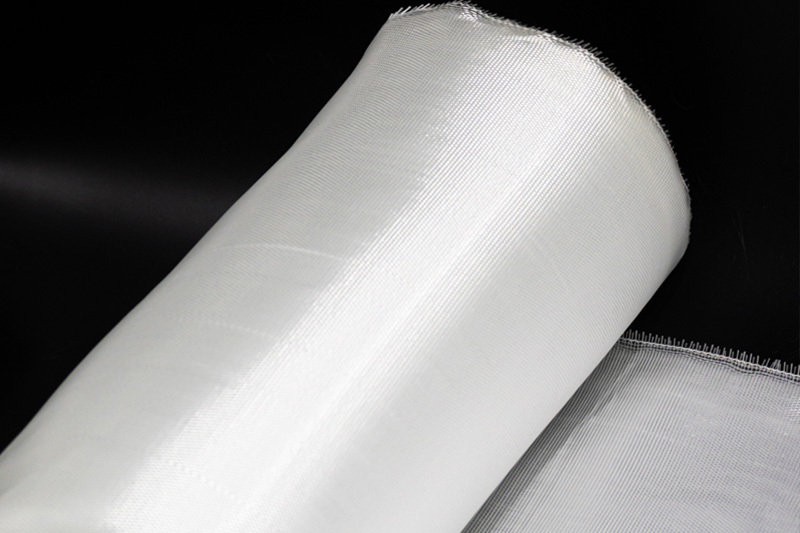
7628 Electronic Fiberglass Cloth: The Engineered Fabric Powering Modern PCB Performance
2026-07-01

Fiberglass Wallpaper: The Engineering-Grade Wallcovering Redefining Interior Durability and Safety
2026-06-29

We produce building materials with glass fiber as the main product.Production headquarters is located in Xiongan New District.


Contact
Room 209, Building S6, 001 Baojing Road North, xiongxian, Baoding, Hebei

Learn more