Welcome To Hebei Xiongan Hengyun Technology Co., Ltd.
 Esperanto
 Shqiptare
 Euskara
 Zulu
Zulu
 Latinus
 Cymraeg
 தமிழ்
தமிழ்
 Slovak
 Slovak
 Afrikaans



7628 Electronic Fiberglass Cloth: The Engineered Fabric Powering Modern PCB Performance
2026-07-01
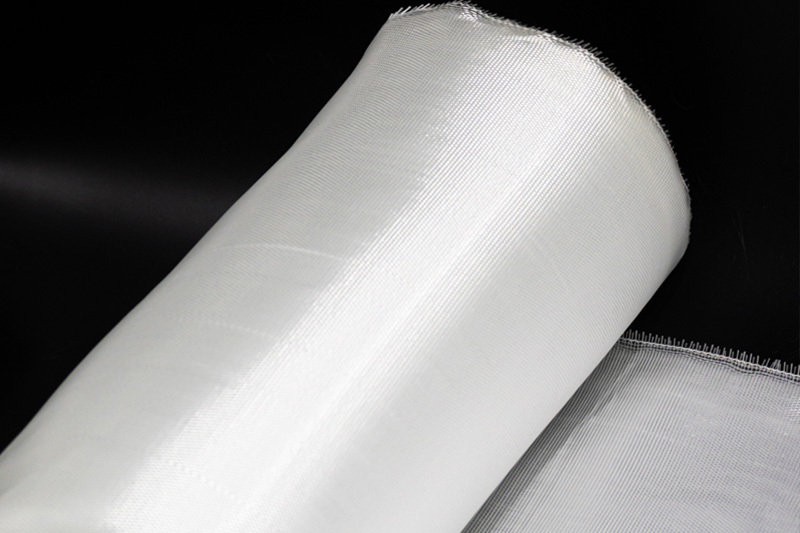

Technical Overview
In the world of printed circuit board manufacturing, few materials are as fundamental yet overlooked as 7628 electronic fiberglass cloth. This specialized woven fabric serves as the primary reinforcement skeleton for copper-clad laminates, providing the structural backbone upon which modern electronics are built. While the designation "7628" may appear cryptic to outsiders, it represents a carefully engineered weave style that has become an industry standard for high-performance PCB substrates.
Decoding the 7628 Specification
The numerical designation 7628 refers to a specific weave construction characterized by its balanced architecture and consistent mechanical properties. Unlike generic fiberglass fabrics, electronic-grade 7628 cloth is manufactured under stringent quality controls to meet the exacting demands of the electronics industry. The cloth is woven from continuous filament E-glass fibers, which provide an optimal combination of electrical insulation, mechanical strength, and dimensional stability.
A critical step in the manufacturing process is the application of a silane-based coupling agent. This proprietary surface treatment ensures superior adhesion between the glass fibers and the resin systems—typically epoxy, polyimide, or PTFE—that impregnate the fabric during laminate production. Without this chemical interface, the fiberglass would fail to bond properly with the resin, compromising the integrity and reliability of the final PCB.
Key Technical Properties
The performance of 7628 electronic fiberglass cloth is defined by several critical characteristics that directly impact PCB quality and functionality:
-
Dimensional Stability: The fabric maintains its geometry under the high temperatures and pressures of the lamination process. This stability is essential for achieving the tight registration tolerances required in multilayer boards, where layer-to-layer alignment must be precise to ensure reliable electrical connections.
-
Mechanical Strength: The woven glass fibers provide exceptional tensile strength, reinforcing the cured laminate against mechanical stresses during component assembly, soldering, and field operation. This reinforcement prevents warpage and delamination, which are common failure modes in poorly reinforced PCBs.
-
Electrical Insulation: As an inorganic glass material, the cloth exhibits excellent dielectric properties. When properly impregnated with resin, the resulting composite offers the electrical insulation necessary for high-voltage and high-frequency applications, while maintaining signal integrity.
-
Uniform Resin Penetration: The weave geometry of 7628 cloth is specifically engineered to allow consistent resin flow during the impregnation process. This uniformity is critical for achieving a homogeneous dielectric constant across the board surface, which directly influences impedance control in high-speed digital circuits.
The Role in High-Performance Electronics
The choice of reinforcement fabric has significant implications for PCB performance. 7628 cloth has become particularly important in applications requiring low dielectric loss and stable signal transmission. When combined with advanced low-loss resin systems, the 7628-based laminate can support the demanding requirements of modern data-intensive applications.
The relationship between the fiberglass weave and electrical performance is subtle but significant. The glass-to-resin ratio within the laminate directly influences the dielectric constant and dissipation factor, with higher glass content generally improving dimensional stability but potentially affecting dielectric properties. The 7628 weave strikes a careful balance, providing the mechanical reinforcement needed while maintaining electrical characteristics suitable for a wide range of applications.
Applications Across the Electronics Spectrum
The versatility of 7628 electronic fiberglass cloth makes it suitable for diverse end-use applications. Its use extends from consumer electronics and automotive systems to industrial controls and telecommunications infrastructure. In each context, the cloth serves the same fundamental purpose: providing the dimensional stability and mechanical integrity required for reliable PCB performance.
Manufacturing Considerations
Producing electronic-grade 7628 cloth requires sophisticated weaving technology and rigorous quality control. The glass fibers must be of consistent diameter, free from defects that could compromise dielectric properties. The weave must be uniform, with precise yarn spacing that allows for the targeted resin content. The surface treatment must be applied evenly, ensuring consistent adhesion throughout the fabric roll.
Furthermore, contamination control is paramount. Even microscopic impurities can lead to dielectric breakdown or poor adhesion, resulting in board failures. Leading manufacturers therefore maintain cleanroom environments and employ continuous monitoring to ensure product quality.
Conclusion
7628 electronic fiberglass cloth exemplifies how a seemingly simple material can have profound impact on advanced technology. As electronics continue to evolve toward higher speeds, greater complexity, and more demanding operating conditions, the importance of high-quality reinforcement fabrics will only increase. Understanding the properties and performance of materials like 7628 is essential for engineers seeking to design and manufacture the next generation of reliable, high-performance electronic systems.
7628 electronic fiberglass cloth,PCB reinforcement,Dimensional stability,E-glass fibers,Silane-based coupling agent,Dielectric properties,Low-loss resin systems
Related news

2026-08-07

2026-08-06

We produce building materials with glass fiber as the main product.Production headquarters is located in Xiongan New District.


Contact
Room 209, Building S6, 001 Baojing Road North, xiongxian, Baoding, Hebei

Learn more