Welcome To Hebei Xiongan Hengyun Technology Co., Ltd.
 Esperanto
 Shqiptare
 Euskara
 Zulu
Zulu
 Latinus
 Cymraeg
 தமிழ்
தமிழ்
 Slovak
 Slovak
 Afrikaans



7628 Electronic Fiberglass Cloth: The Precision Backbone of Advanced Circuitry
2026-04-10
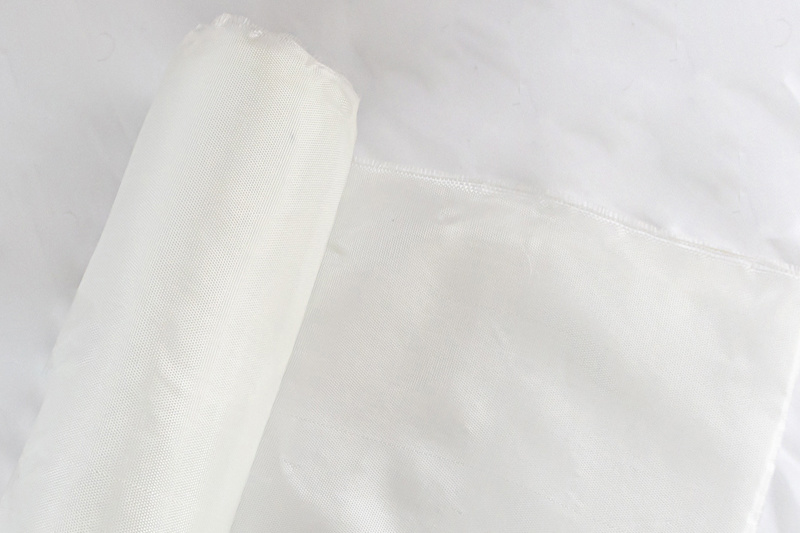

In the intricate world of printed circuit boards (PCBs) and advanced electronics, success depends on materials that deliver flawless consistency, thermal stability, and electrical insulation. Among these critical components, one specification stands out as an industry gold standard: 7628 Electronic Fiberglass Cloth. This precision-woven fabric has become the hidden foundation upon which modern computing, communications, and industrial electronics are built, enabling the relentless drive toward smaller, faster, and more reliable devices.
A Specification Born for Performance
The designation "7628" is not a random number—it represents a specific set of dimensional and performance characteristics tailored for high-demand electronic applications. With a nominal thickness of approximately 0.173 mm to 0.185 mm and a weight of around 200–210 g/m², 7628 cloth occupies a critical position in the range of PCB reinforcement materials. Its balanced plain-weave construction, featuring a standard count of 41.5 ends per inch in the warp direction and 31.5 picks per inch in the fill direction, provides exceptional dimensional stability and mechanical strength.
What makes 7628 truly indispensable is its electrical performance. The cloth is manufactured from high-quality E-glass (electrical-grade glass) filaments, typically sized with silane-based coupling agents that ensure superior adhesion to epoxy resins. When laminated into FR-4 panels, the resulting material exhibits a dielectric constant of approximately 5.3 to 5.6 at 1 MHz, low dissipation factors, and high breakdown voltage exceeding 30 kV/mm. These characteristics are essential for multilayer PCBs used in servers, automotive electronics, telecommunications equipment, and consumer devices.
Enabling the Multi-Layer PCB Revolution
As electronics become increasingly complex, the demand for high-layer-count PCBs has soared. 7628 cloth has emerged as a preferred reinforcement for core layers and prepregs in boards with 8, 12, or even more than 20 layers. Its moderate thickness allows engineers to build up laminates with precise dielectric spacing, controlling impedance and signal integrity—critical parameters for high-speed digital circuits operating at gigahertz frequencies.
The global shift toward electric vehicles (EVs) and advanced driver-assistance systems (ADAS) has further accelerated demand. Modern automotive electronics must withstand extreme temperatures, vibration, and humidity while maintaining absolute reliability. 7628 cloth-based laminates deliver exactly these properties, providing the thermal endurance and mechanical robustness required for engine control units, battery management systems, and sensor fusion modules.
Manufacturing Excellence and Quality Assurance
Producing 7628 electronic fiberglass cloth demands extraordinary precision. The glass filaments are drawn to diameters as fine as 5–9 microns, then twisted and plied into yarns before weaving. Any variation in yarn tension, loom alignment, or finish application can compromise the final PCB's performance. Leading manufacturers such as Taishan Fiberglass (a subsidiary of Sinoma), Nittobo, and Asahi utilize state-of-the-art weaving looms and real-time quality monitoring systems to ensure consistency.
Post-weaving, the cloth undergoes critical heat-cleaning and surface treatment processes. The heat-cleaning step removes residual starches and binders, while silane-based coupling agents are applied to optimize resin adhesion. This treatment ensures that the cloth wets out completely during PCB lamination, eliminating voids and achieving the homogeneous dielectric layer essential for reliable circuit performance.
Meeting the Demands of High-Frequency and High-Speed Designs
The telecommunications industry's migration to 5G and beyond has introduced new challenges for PCB materials. Higher frequencies demand lower dielectric constant (Dk) and dissipation factor (Df) to minimize signal loss. While traditional 7628 cloth using standard E-glass operates well up to several gigahertz, manufacturers have responded with low-Dk variants incorporating glass formulations with reduced dielectric constants. These advanced versions of 7628 maintain the same dimensional format while offering improved high-frequency performance, enabling 5G infrastructure, antenna systems, and high-speed data center equipment.
A Sustainable and Reliable Choice
The electronic fiberglass cloth industry has also made significant strides in sustainability. Closed-loop water recycling in filament drawing, energy-efficient weaving technologies, and reduced-emission heat-cleaning furnaces have lowered the environmental footprint of 7628 production. Furthermore, the inherent durability of glass fiber-reinforced laminates contributes to longer product lifespans, reducing electronic waste.
Looking Forward: The Unseen Enabler of Innovation
As the world anticipates 6G communications, artificial intelligence hardware, and next-generation automotive electronics, 7628 electronic fiberglass cloth will continue to play its essential, unseen role. Its unique combination of dimensional precision, electrical insulation, and mechanical strength ensures that the PCBs of tomorrow will remain reliable, manufacturable, and cost-effective. In the silent, layered heart of every advanced electronic device, 7628 cloth stands as a testament to the importance of getting the fundamentals right—one precise weave at a time.
7628 Electronic Fiberglass Cloth,PCB Reinforcement,Thermal Stability,Electrical Insulation, Dimensional Stability
Related news
7628 Electronic Fiberglass Cloth: The Precision Backbone of Advanced Circuitry
2026-04-10
Fiberglass Mesh: The Smart Reinforcement Driving Global Infrastructure Resilience
2026-04-07

Fiberglass Cloth: The Precision-Engineered Textile Driving Industrial Excellence
2026-04-03

We produce building materials with glass fiber as the main product.Production headquarters is located in Xiongan New District.


Contact
Room 209, Building S6, 001 Baojing Road North, xiongxian, Baoding, Hebei

Learn more