Welcome To Hebei Xiongan Hengyun Technology Co., Ltd.
 Esperanto
 Shqiptare
 Euskara
 Zulu
Zulu
 Latinus
 Cymraeg
 தமிழ்
தமிழ்
 Slovak
 Slovak
 Afrikaans



Fiberglass Mesh: The Smart Reinforcement Driving Global Infrastructure Resilience
2026-04-07
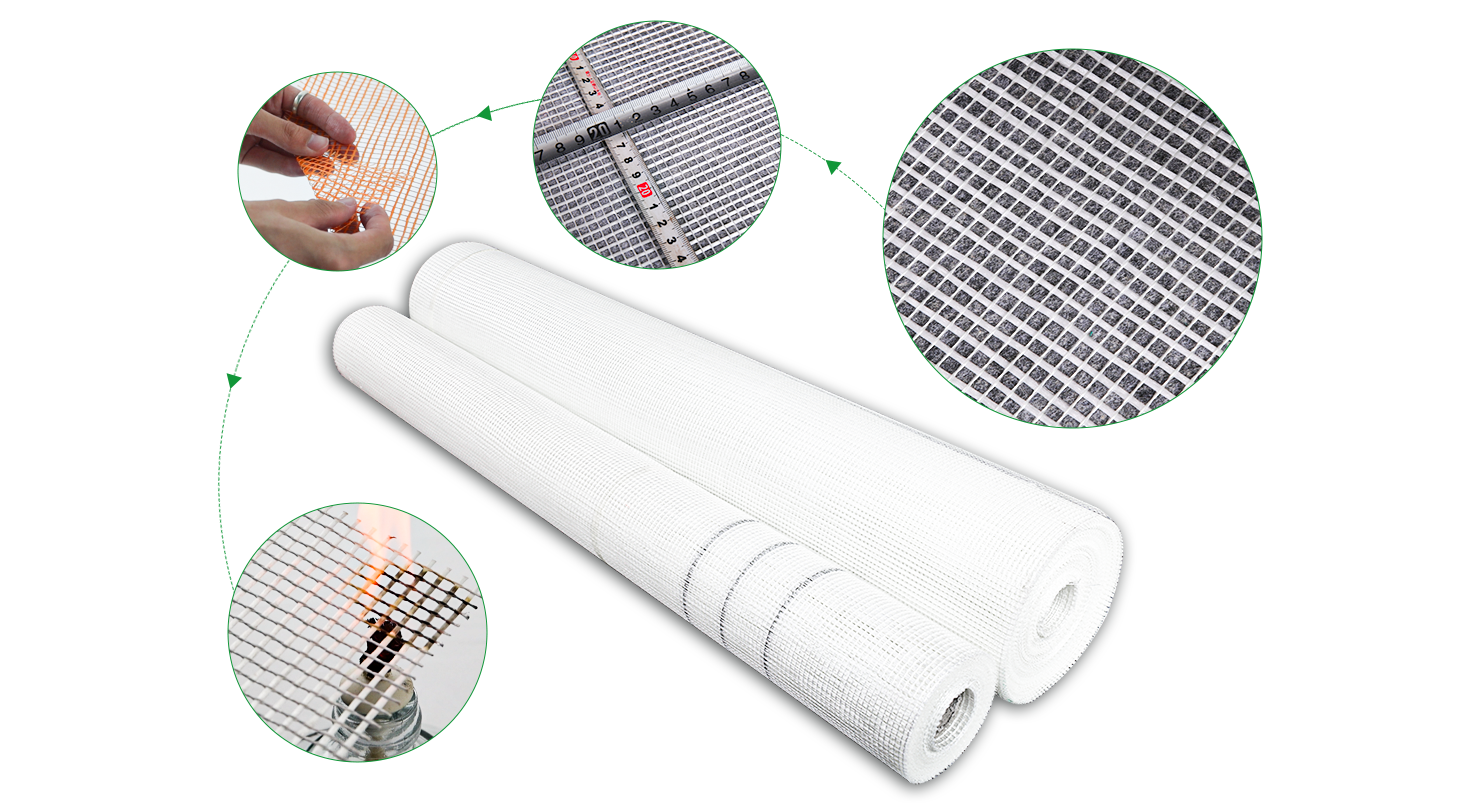

In an era where infrastructure durability and energy efficiency have become global priorities, one material is quietly revolutionizing the construction industry: Fiberglass Mesh. Often unseen but critically essential, this alkali-resistant woven fabric has emerged as a go-to solution for architects, engineers, and contractors seeking to extend building lifespans, prevent cracking, and enhance thermal insulation performance. As urbanization accelerates and climate challenges intensify, fiberglass mesh is proving that great strength can come in lightweight, flexible packages.
The Growing Demand for High-Performance Reinforcement
The global fiberglass mesh market is on a steady upward trajectory, driven by increasing investments in residential, commercial, and industrial construction. According to recent industry analyses, the market is projected to grow at a compound annual growth rate of approximately 5% over the next several years, reaching hundreds of millions in value. This growth is fueled by a simple but powerful reality: fiberglass mesh delivers exceptional tensile strength without the weight, corrosion risks, or installation difficulties associated with traditional steel reinforcement.
Unlike metal lath or steel rebar, fiberglass mesh does not rust, conduct electricity, or create thermal bridges. Its inherent resistance to alkali attack makes it the ideal partner for cement-based systems, where it can be embedded directly into plasters, renders, and mortars without degrading over time. This chemical compatibility ensures that reinforced structures maintain their integrity for decades, even in harsh environments such as coastal areas or industrial zones.
Transforming Building Envelopes with ETICS
Perhaps the most significant application of fiberglass mesh lies in External Thermal Insulation Composite Systems (ETICS). As governments worldwide tighten building energy codes and promote net-zero emissions targets, ETICS has become a standard solution for improving facade performance. Within these systems, fiberglass mesh acts as the critical reinforcement layer, absorbing mechanical stresses and temperature-induced movements while preventing cracks from propagating through the finish coat.
Products such as standard 145gsm or 160gsm meshes, with grid openings around 4x4mm to 5x5mm, are widely adopted for their balance of flexibility and strength. High-performance variants featuring dense weaves and enhanced coating technologies offer even greater impact resistance and dimensional stability. By enabling thinner, lighter, and more durable insulation facades, fiberglass mesh directly contributes to reduced heating and cooling loads, lower carbon emissions, and improved occupant comfort.
Versatility Across Diverse Applications
Beyond building envelopes, fiberglass mesh has proven its value across a wide spectrum of uses. In waterproofing systems, it reinforces membranes to resist cracking from substrate movement. In marble and tile backing, it prevents breakage and adds structural cohesion. Industrial applications include filtration screens, grinding wheel reinforcements, and protective guards where heat and chemical resistance are required. Even in infrastructure projects such as bridge decks and road pavements, specialized meshes are used to control reflective cracking and extend service life.
Sustainability and Future Innovation
As the construction industry embraces circular economy principles, fiberglass mesh manufacturers are responding with greener production methods. Advances include boron-free glass formulations, reduced-emission coatings, and improved recycling processes for production waste. These innovations lower the environmental footprint of the material while maintaining or even enhancing its mechanical performance. Additionally, the long service life and corrosion-free nature of fiberglass mesh mean fewer repairs and replacements over a building's lifetime, translating into significant resource savings.
Conclusion
Fiberglass mesh may not be the most glamorous component on a construction site, but it is undoubtedly one of the most effective. Its unique combination of strength, durability, chemical resistance, and ease of installation makes it an indispensable tool for modern construction. As global demand for resilient, energy-efficient, and sustainable buildings continues to rise, fiberglass mesh stands ready as a smart, reliable, and forward-thinking reinforcement solution. From high-rise facades to industrial floors, this humble woven material is quietly building a stronger, safer, and greener world.
Fiberglass Mesh,Alkali-Resistant,Construction Reinforcement,Durability, Tensile Strength,Sustainability
Related news
Fiberglass Mesh: The Smart Reinforcement Driving Global Infrastructure Resilience
2026-04-07

Fiberglass Cloth: The Precision-Engineered Textile Driving Industrial Excellence
2026-04-03

Woven Roving Revolution: How a Reinvention of a Classic Composite is Reshaping Heavy Industries
2026-03-30

We produce building materials with glass fiber as the main product.Production headquarters is located in Xiongan New District.


Contact
Room 209, Building S6, 001 Baojing Road North, xiongxian, Baoding, Hebei

Learn more