Welcome To Hebei Xiongan Hengyun Technology Co., Ltd.
 Esperanto
 Shqiptare
 Euskara
 Zulu
 Latinus
 Cymraeg
 தமிழ்
 Slovak
 Slovak
 Afrikaans



High - Strength and Multifunctional Fiberglass Mesh Cloth: Transforming Construction and Industry
2025-05-15
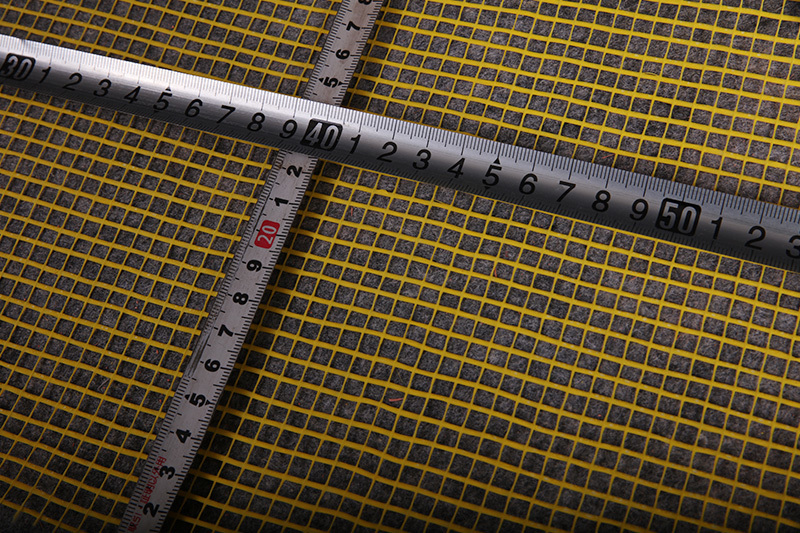
In the world of construction and industrial materials, fiberglass mesh cloth has emerged as a highly versatile and essential component. This specialized fabric, made primarily from glass fibers, offers a unique combination of properties that make it suitable for a wide range of applications.
Manufacturing Process
Fiberglass mesh cloth is typically produced by weaving together fine glass fibers. These fibers are first drawn from molten glass, which is then extruded through tiny holes to create long, thin filaments. These filaments are combined and woven into a mesh pattern using specialized machinery. After weaving, the mesh may undergo additional treatments, such as coating with a resin or other protective materials, to enhance its performance and durability.
Key Characteristics
- ▷▷▷High Strength and Tensile Resistance
Fiberglass mesh cloth exhibits remarkable strength, allowing it to withstand significant pulling and stretching forces. This property makes it an ideal choice for applications where reinforcement is required, such as in the construction of walls, roofs, and floors. For example, when used in stucco or plaster applications, the mesh helps distribute stress evenly, preventing cracks and improving the overall structural integrity.
- ▷▷▷Excellent Chemical Resistance
It is highly resistant to a variety of chemicals, including acids, alkalis, and moisture. This chemical stability ensures that the mesh does not degrade or corrode over time, even when exposed to harsh environmental conditions. As a result, it can be used in areas with high humidity, such as bathrooms and basements, as well as in industrial settings where exposure to chemicals is common.
- ▷▷▷Thermal and Fire Resistance
Fiberglass has good thermal insulation properties, helping to regulate temperature and reduce energy consumption in buildings. Additionally, it is non - combustible, making it an important material for fire - resistant applications. In the event of a fire, the mesh can help prevent the spread of flames and protect the underlying structure.
- ▷▷▷Dimensional Stability
The mesh cloth maintains its shape and size well, even under changing temperatures and humidity levels. This dimensional stability is crucial for applications where precise fitting and alignment are necessary, such as in the installation of insulation materials or the reinforcement of concrete structures.
- ▷▷▷Lightweight yet Durable
Despite its strength, fiberglass mesh cloth is relatively lightweight, which makes it easy to handle and install. Its durability ensures a long service life, reducing the need for frequent replacements and maintenance.
Diverse Applications
- ▷▷▷Construction Industry
Wall and Ceiling Reinforcement: Fiberglass mesh is commonly used to reinforce drywall, plaster, and stucco. It helps prevent cracking due to settlement, thermal expansion, or mechanical stress. In new construction projects, the mesh is embedded in the wet plaster or stucco, providing added strength and stability to the finished surface.
- ▷▷▷Roofing Applications: It is used in roofing systems, both for flat and pitched roofs. The mesh can be incorporated into roofing membranes or used as a base layer for applying coatings. It enhances the durability of the roof, protecting it from weather - related damage such as UV rays, rain, and wind.
- ▷▷▷Insulation and Waterproofing: In insulation systems, fiberglass mesh cloth is used to hold insulation materials in place and provide additional strength. It is also an important component in waterproofing membranes, helping to prevent water penetration and protect the building's structure from water damage.
- Industrial Applications
Automotive and Aerospace: Fiberglass mesh is used in the manufacturing of composite materials for automotive and aerospace components. It provides reinforcement to lightweight materials, such as carbon fiber - reinforced polymers, improving their strength - to - weight ratio. This results in more fuel - efficient vehicles and aircraft.
Pipe and Tank Reinforcement: In the industrial sector, fiberglass mesh is used to reinforce pipes and tanks made of materials like fiberglass - reinforced plastic (FRP). The mesh increases the pressure - bearing capacity of these structures and protects them from corrosion, extending their lifespan.
Filtration and Screening: Due to its fine mesh structure and chemical resistance, fiberglass mesh cloth can be used in filtration systems to separate particles from liquids or gases. It is also used in screening applications, such as in the food and beverage industry to remove impurities from products.
- ▷▷▷Home Improvement and DIY Projects
Wall Repair and Patching: Homeowners often use fiberglass mesh to repair cracks in walls or ceilings. The mesh is applied over the crack and covered with joint compound or plaster, providing a strong and seamless repair.
Tile Installation: It can be used as a substrate for tile installation, especially in areas where the surface may be uneven or prone to movement. The mesh helps to create a more stable base for the tiles, reducing the risk of cracking or loosening.
fiberglass mesh,high strength,tensile resistance,chemical resistance,thermal resistance,fire resistance,dimensional stability,construction applications,industrial applications,market trends
Related news



We produce building materials with glass fiber as the main product.Production headquarters is located in Xiongan New District.


Contact
Room 209, Building S6, 001 Baojing Road North, xiongxian, Baoding, Hebei

Learn more