Welcome To Hebei Xiongan Hengyun Technology Co., Ltd.
 Esperanto
 Shqiptare
 Euskara
 Zulu
 Latinus
 Cymraeg
 தமிழ்
 Slovak
 Slovak
 Afrikaans



7628 Electronic Fiberglass Cloth: Evolving to Meet the Demands of 5G and High-Frequency Electronics
2026-04-27
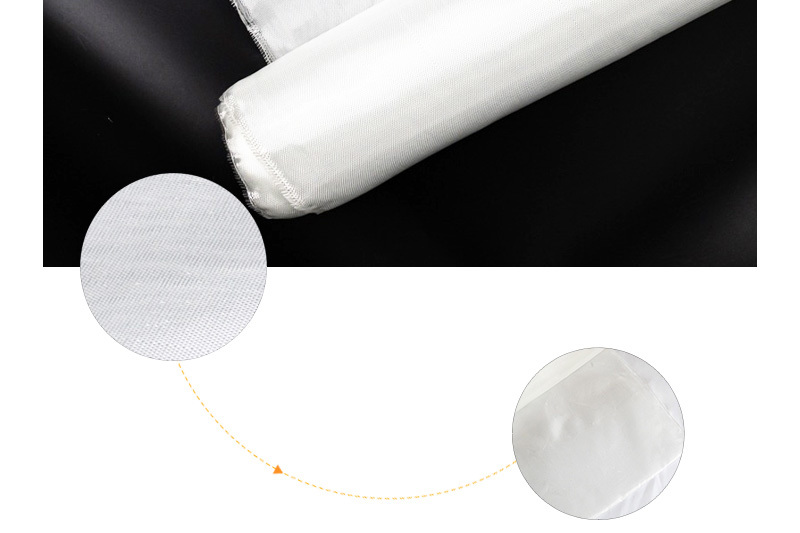
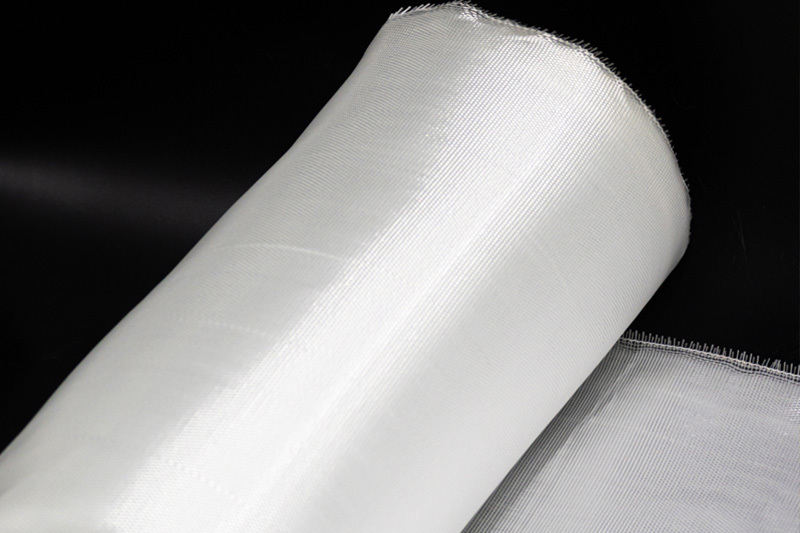
As the world races toward 5G connectivity, autonomous vehicles, and satellite communications, the humble 7628 Electronic Fiberglass Cloth is undergoing a quiet but profound transformation. No longer just a structural reinforcement for standard FR-4 circuit boards, this precision-woven fabric has evolved into a performance-critical component for high-frequency, high-speed digital applications. Advanced variants of 7628 cloth—featuring lower dielectric constants (Dk) and dissipation factors (Df)—are now enabling engineers to achieve signal integrity at millimeter-wave frequencies, redefining what's possible in modern electronics design.
The Low-Dielectric Revolution
Traditional E-glass 7628 cloth has served the PCB industry reliably for decades. However, as signal frequencies push beyond 10 GHz and into the 28–39 GHz range used by 5G mmWave bands, standard E-glass introduces unacceptable signal loss and delay. In response, leading fiberglass manufacturers have developed low-loss glass compositions, such as L-glass and SP-glass, woven into the familiar 7628 geometry. These advanced fabrics reduce the dielectric constant from the typical 6.8–7.0 of E-glass down to 4.8–5.2, while cutting the dissipation factor from over 0.02 to under 0.0015 at high frequencies. For antenna-in-package modules, automotive radar systems, and high-speed data center switches, this improvement translates directly into better range, lower power consumption, and fewer bit errors.
One notable innovation is the introduction of ultra-flat 7628 cloth produced through controlled calendering processes. By reducing fabric surface roughness from several microns to less than one micron, manufacturers minimize the "glass fiber effect"—a phenomenon where copper foil roughness interacts with the glass weave pattern to cause impedance variations. This refinement is particularly valuable for 400G and 800G Ethernet switches, where timing margins are measured in picoseconds.
Manufacturing Precision at Scale
Producing low-dielectric 7628 cloth at commercial volumes requires extraordinary manufacturing discipline. Glass formulations must be melted at carefully controlled temperatures to prevent devitrification. Filament diameters, typically 7–9 microns for 7628, must maintain consistent circularity and freedom from surface defects that could become stress concentration points. Weaving looms operate at slower speeds than standard E-glass production to minimize friction and filament breakage. After weaving, the cloth undergoes heat cleaning followed by silane-based finishing treatments specially formulated to preserve low-loss characteristics while ensuring strong adhesion to low-dielectric resins like PTFE, PPO, and hydrocarbon-based laminates.
Companies such as Nittobo, Taiflex, and Shengyi Technology have invested millions in dedicated production lines for low-loss 7628 variants. These facilities employ real-time optical inspection systems capable of detecting single-filament defects, ensuring that every square meter of fabric meets the stringent cleanliness and uniformity standards required by aerospace and telecom customers.
Enabling Next-Generation Applications
The impact of advanced 7628 cloth extends across multiple high-growth markets. In automotive radar (77–81 GHz), where every decibel of signal loss reduces pedestrian detection range, low-loss 7628 laminates allow engineers to design compact, high-performing radar modules that fit behind bumpers and emblems. In 5G base stations, massive MIMO antenna arrays rely on 7628-based laminates to maintain phase coherence across hundreds of individual radiating elements. For low-earth-orbit satellite constellations, where radiation hardness and thermal stability are critical, specialized 7628 fabrics with low-outgassing finishes are enabling lightweight, reliable communication payloads.
A Sustainable Path Forward
Recognizing the environmental footprint of glass fiber production, manufacturers of advanced 7628 cloth are also pioneering green initiatives. Some have introduced boron-free glass compositions that reduce melting temperatures, lowering energy consumption and CO₂ emissions by up to 15%. Others are developing recycling programs for production scrap, recovering clean glass fibers that can be reintroduced into the melt process. As major electronics brands push for carbon-neutral supply chains, these sustainable 7628 variants are gaining rapid adoption.
Looking Ahead
The evolution of 7628 Electronic Fiberglass Cloth from a standard reinforcement into an engineered material for extreme high-frequency applications demonstrates the remarkable adaptability of glass fiber technology. As 5G matures and 6G research accelerates, demanding frequencies beyond 100 GHz, 7628 cloth will continue to evolve—incorporating new glass chemistries, nano-coatings, and hybrid weaves. For now, it stands as a powerful example of how a seemingly simple material can be re-engineered to meet the most challenging demands of modern electronics, quietly enabling the connected, high-speed world of tomorrow.
Ткань 7628,Стеклянная нить,7628 Fabric,Прецизионное ткачество,E-стекло,Диаметр стекловолокна
Related news



We produce building materials with glass fiber as the main product.Production headquarters is located in Xiongan New District.


Contact
Room 209, Building S6, 001 Baojing Road North, xiongxian, Baoding, Hebei

Learn more