Welcome To Hebei Xiongan Hengyun Technology Co., Ltd.
 Esperanto
 Shqiptare
 Euskara
 Zulu
Zulu
 Latinus
 Cymraeg
 தமிழ்
தமிழ்
 Slovak
 Slovak
 Afrikaans



Woven Roving Revolution: The Heavyweight Champion Reshaping Composite Manufacturing
2026-06-16
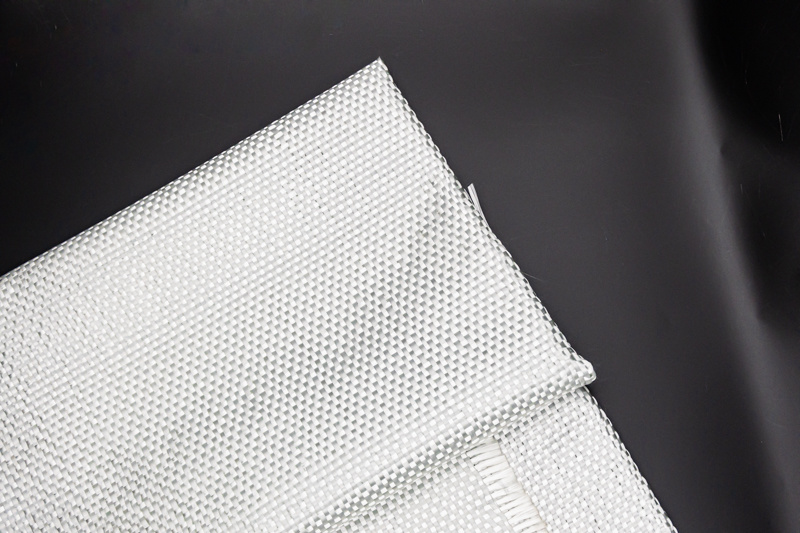

In the world of composite materials, where strength meets weight and durability defines performance, one product has long served as the backbone of heavy-duty lamination: woven roving. Now, as industries from renewable energy to automotive manufacturing push for ever-larger and stronger structures, this heavyweight fiberglass fabric is experiencing a quiet but powerful revolution in both application scope and technological sophistication.
What Is Woven Roving?
Woven roving is a bidirectional reinforcement fabric created by weaving continuous strands of fiberglass roving at right angles. Unlike lighter fiberglass cloth, woven roving is the heaviest woven reinforcement in the fiberglass lineup, with areal weights ranging from 200 to over 800 grams per square meter. Its coarse basket weave creates a rough-textured fabric that is inexpensive and exceptionally strong—ideal for rapidly building up laminate thickness in large, flat areas.
E-glass remains the dominant fiber type, valued for its excellent balance of mechanical strength, electrical resistivity, chemical resistance, and cost-effectiveness. The fabric is compatible with multiple resin systems, including polyester, vinyl ester, and epoxy resins, making it a versatile choice across diverse manufacturing processes.
The Power of Layering: CSM and Woven Roving
One of the most time-tested strategies in composite fabrication is the alternation of chopped strand mat (CSM) with woven roving. CSM, with its randomly oriented fibers, provides isotropic strength and helps conform to complex curves, while woven roving delivers directional strength and rapid thickness build-up. This combination significantly improves dimensional stability and laminate strength, which is why it remains a go-to approach for mold construction, boat building, and large-scale infrastructure projects.
However, the coarse weave of woven roving presents a challenge: the texture can "print through" on finished surfaces, making it unsuitable for visible cosmetic layers. Professionals typically begin with a lightweight surfacing fabric before applying woven roving to minimize this effect.
Market Drivers: From Wind Energy to Automotive Lightweighting
The global market for fiberglass woven roving is on a strong growth trajectory. A major driver is the wind energy sector. As wind turbine blades grow larger to improve efficiency, the need for lightweight yet exceptionally strong reinforcement materials has skyrocketed. Fiberglass roving provides the ideal balance of strength and weight reduction required for these massive structures.
Similarly, the automotive industry's relentless pursuit of lightweight materials to improve fuel efficiency and support electric vehicle adoption is fueling demand. Woven roving is used in panels, body components, and structural parts where high strength-to-weight ratios are critical. The construction sector also represents a substantial market, utilizing woven roving to reinforce concrete, pipes, tanks, and building panels.
Technological Innovations and Regional Growth
The so-called "woven roving revolution" is not just about expanding applications—it is also driven by technological advancements. Manufacturers are increasingly integrating automation, AI, and advanced weaving technologies to improve product consistency, reduce waste, and develop new product formulations with enhanced properties. Sustainability is also gaining traction, with growing interest in bio-based resin systems and recycled glass fibers.
Regionally, Asia-Pacific dominates production and consumption, led by China, which is the world's largest producer. North America and Europe remain critical markets due to advanced manufacturing capabilities and strong demand from aerospace, wind energy, and automotive end-users.
Conclusion
Woven roving is no longer just the "heavy and cheap" option for large laminates. It has become a strategic material for industries building the infrastructure of the future—from wind farms to electric vehicles. As manufacturing technologies advance and new applications emerge, the woven roving revolution is proving that sometimes, the heaviest fabrics carry the most weight in innovation.
Woven roving,Fiberglass reinforcement,Laminate thickness,Bidirectional fabric,Wind turbine blades,Automotive lightweighting
Related news

2026-08-07

2026-08-06

2026-07-31

We produce building materials with glass fiber as the main product.Production headquarters is located in Xiongan New District.


Contact
Room 209, Building S6, 001 Baojing Road North, xiongxian, Baoding, Hebei

Learn more