Welcome To Hebei Xiongan Hengyun Technology Co., Ltd.
 Esperanto
 Shqiptare
 Euskara
 Zulu
 Latinus
 Cymraeg
 தமிழ்
 Slovak
 Slovak
 Afrikaans



Chopped Strand Mats: From "Commodity Material" to Critical Enabler of Advanced Manufacturing
2026-09-16
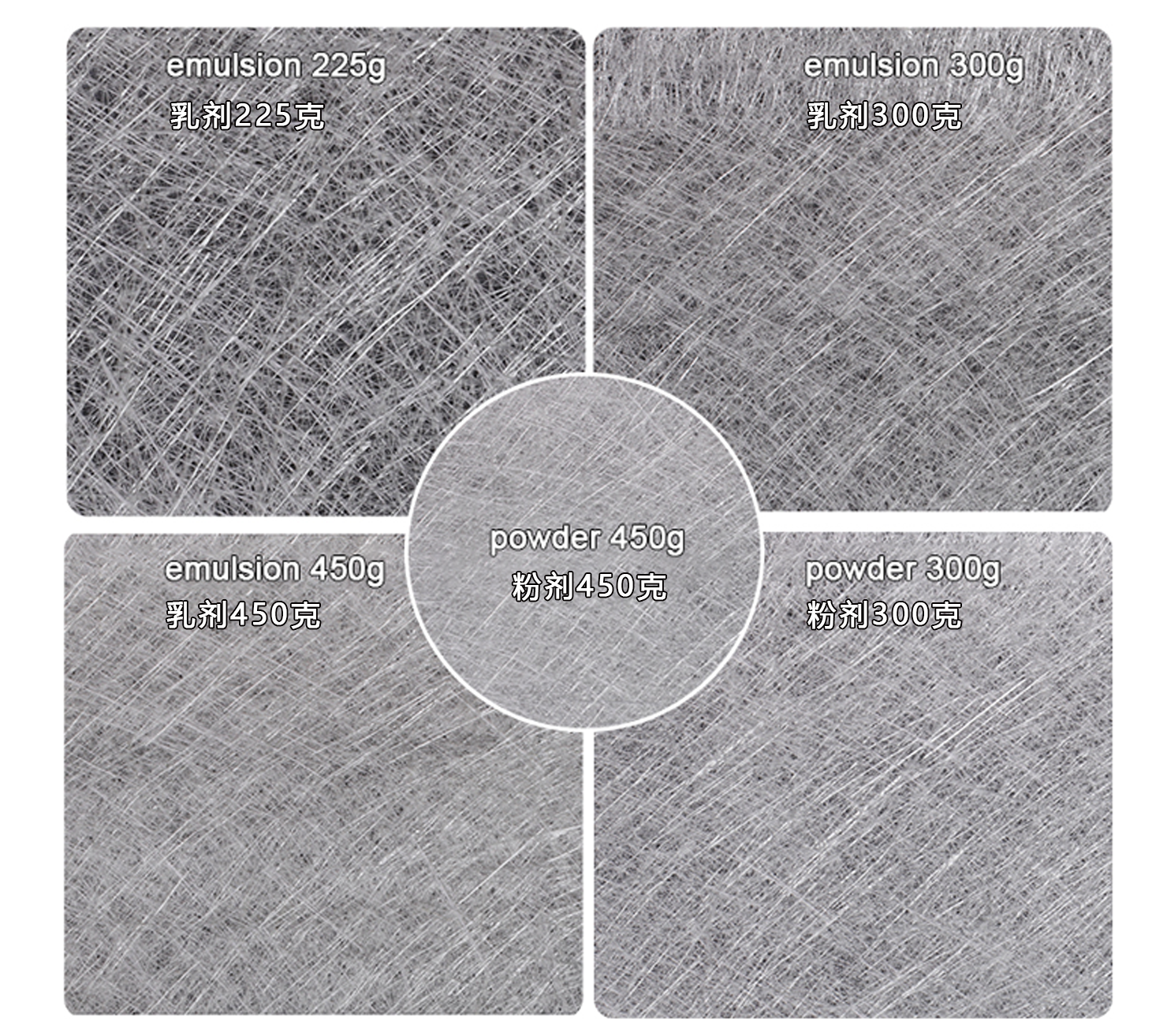
For decades, chopped strand mat has been regarded within the composites industry as a "basic" — even traditional — reinforcement material. Made from randomly distributed chopped glass fibers bound together by powder or emulsion binders, its process is mature and its cost is controllable. Yet it is precisely this seemingly unassuming product that is now undergoing a profound transformation from a commodity material into a technology-driven solution.
An Unassuming Material with Non-Negotiable Physics
The core advantage of chopped strand mat lies in its unique physical structure. The random orientation of the fibers gives the material isotropic strength characteristics, enabling excellent conformability in complex curved molding. Unlike directional fabrics, chopped strand mat can conform to small-radius molds while maintaining uniform resin wet-out speed and good air release performance. These characteristics make it indispensable as a reinforcing layer in hand lay-up, continuous lamination and resin transfer molding processes. In marine manufacturing, chopped strand mat remains one of the primary reinforcements for FRP hulls and decks, with its resistance to osmosis and chemical attack validated over decades.
Offshore Wind Raises the Bar
A notable feature of the current industrial evolution is that chopped strand mat is penetrating higher-performance application scenarios. The expansion of offshore wind has created structural demand for glass fiber reinforcement. As turbine blades exceed the hundred-meter scale, the root transition zone, nacelle fairings and internal flow-guiding structures remain dependent on chopped strand mat — these complex geometries require a reinforcement that wets out quickly, conforms uniformly and does not produce dry spots. Wind OEMs have upgraded their specifications from "usable" to "controllable": binder dissolution speed, fiber dispersion uniformity, and compatibility with vinyl ester and epoxy resin systems have all become technical thresholds for entry into approved supplier lists.
Suppliers Compete on Service, Not Just Rolls
The competitive logic on the supply side has shifted accordingly. Leading chopped strand mat manufacturers no longer simply sell roll goods; they treat application engineering support, customized specification development and rapid sample validation as core service capabilities. New-generation products launched by companies such as Ilium Composites focus on binder-free formulations and the integration of recycled polyester surface veils, reducing processing steps and improving laminate surface quality without sacrificing processing performance. This direction responds to downstream customers' dual demands for cleaner resin systems and a lower environmental footprint.
Sustainability Reshapes the Formulation Debate
Sustainability pressure is likewise reshaping industry practice. Powder binders are increasingly favored by continuous lamination lines for their higher purity, while residual surfactants in emulsion binders can react with stabilizers in the resin under long-term UV exposure, causing yellowing or performance degradation in transparent panels. This upgraded understanding of technical detail is driving material substitution in architectural glazing and agricultural greenhouse applications. At the same time, some suppliers have begun exploring bio-based binders and recyclable fiber solutions to meet increasingly stringent procurement standards in European and North American markets.
A Shifting Regional Map
Regionally, Asia continues to dominate global chopped strand mat capacity and consumption, with Chinese manufacturers holding significant cost advantages in the scaled production of powder and emulsion mats. North American and European markets lean toward higher-value segments such as marine anti-corrosion, chemical storage tanks and premium building panels. Notably, water treatment and desalination projects in the Middle East and North Africa are emerging as new growth points for chopped strand mat used in FRP pipes and tanks.
The Real Differentiator: Process Understanding
The future of the chopped strand mat industry depends on whether it can maintain a balance between "cost efficiency" and "technical traceability." For suppliers, true differentiation lies not in production scale but in the depth of understanding of downstream process pain points — from second-level optimization of wet-out speed, to chemical matching at the fiber-resin interface, to quality consistency across the supply chain. Those able to systematically deliver these capabilities will occupy a position in the composites value chain far more critical than that of a mere "material supplier."
Chopped strand mat,Glass fiber reinforcement,Value chain,Binder-free formulations,Sustainability
Related news



We produce building materials with glass fiber as the main product.Production headquarters is located in Xiongan New District.


Contact
Room 209, Building S6, 001 Baojing Road North, xiongxian, Baoding, Hebei

Learn more