Welcome To Hebei Xiongan Hengyun Technology Co., Ltd.
 Esperanto
 Shqiptare
 Euskara
 Zulu
 Latinus
 Cymraeg
 தமிழ்
 Slovak
 Slovak
 Afrikaans



What’s glass, and how are modern-day researchers enhancing its properties?
2023-04-21
c&en
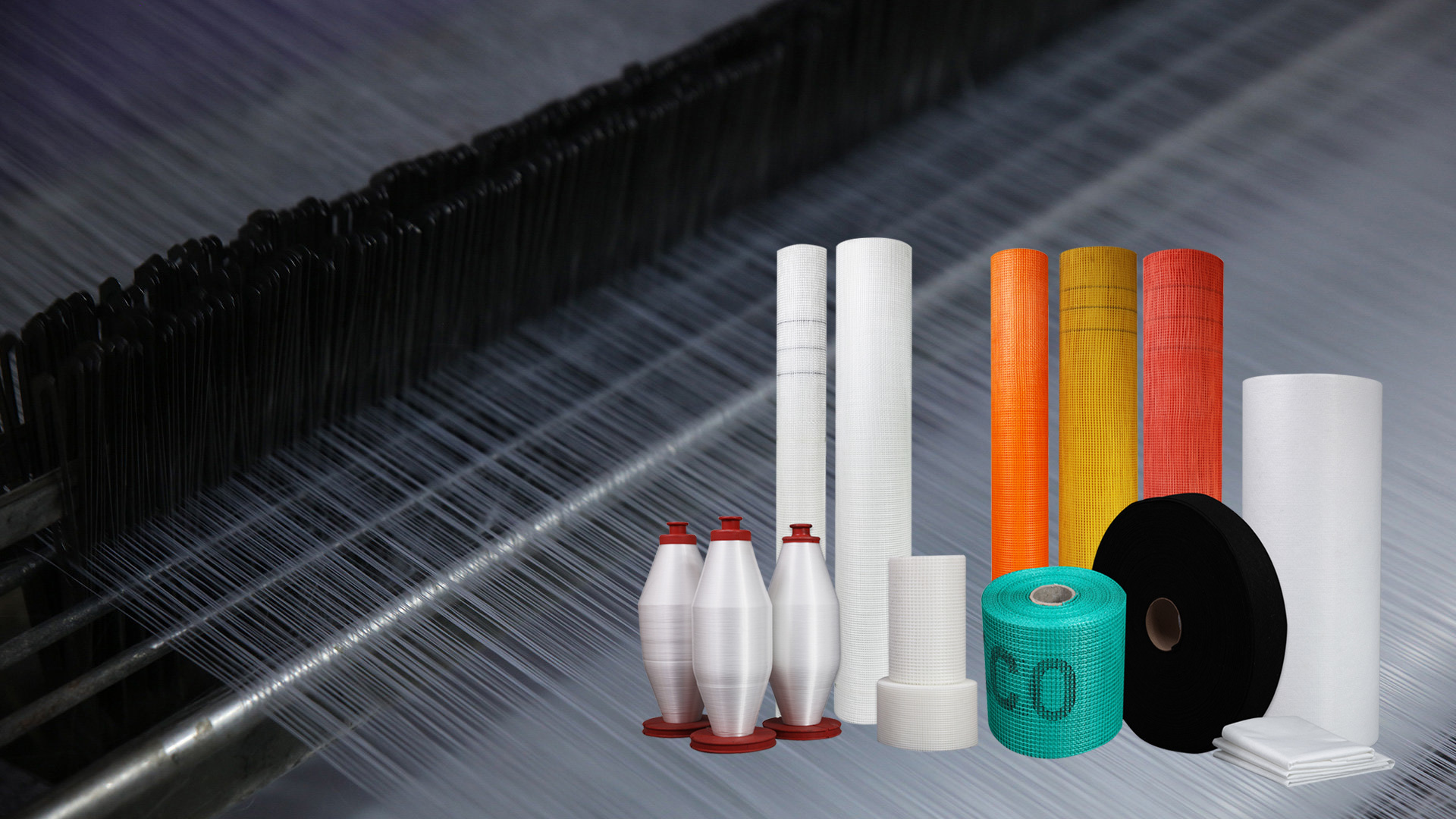
“Many people may not realize that glass is made and used in fiber form because the applications are mostly hidden,” says Michelle Korwin-Edson, a senior scientist at Owens Corning, a leading fiberglass manufacturer. Fiberglass is widely used as house and building insulation, she points out, but it may go unnoticed because it’s usually covered by drywall or tucked away in an attic.
Fiberglass may not be a flashy material, but it’s ubiquitous. It’s also big business. “Today there are over 40,000 applications just for reinforcement glass fiber,” Korwin-Edson says. Worldwide, manufacturers make some 5 million metric tons of the stuff annually, mainly for insulation and composites. Market analysts estimate that the amount produced in 2017 was worth nearly $14 billion. By 2025, they predict, that figure will climb to more than $21 billion.
Fiberglass makers have been producing the wispy material commercially since the 1930s, when it started gaining ground as a thermal insulation material for buildings. Much has changed since that time, as manufacturers have learned to tweak the glass fibers’ composition to impart properties that better suit one application or another. But many of the basics, including the key starting materials—silica sand (mainly SiO2), soda ash (or sodium carbonate, Na2CO3), and limestone (CaCO3)—remain the same.
To form fibers in the 5-to-20-µm-diameter range, manufacturers deliver molten glass to an extrusion device that drives the hot liquid through a nozzle that has thousands of tiny holes. The setup and processing steps differ according to the type of fiber being produced. For example, making glass-wool fibers for insulation is initially similar to making cotton candy, Korwin-Edson says. Fine streams of glass emerge horizontally through holes in a rotating spinner and quickly solidify. Afterward, they are chopped by blasts of air that blow them down to a moving conveyor belt, where they are collected and formed into insulation products, including wools, mats, and boards.
Glassmakers typically use a vertical extrusion process to make so-called continuous fibers for reinforcing plastics. According to Hong Li, a senior scientist at Nippon Electric Glass, individual fibers are gathered in bundles of 200–6,000 filaments and woven into fabrics, treated with polymers (resins) to hold them together, or processed in other ways, depending on the application.
One of the first major applications for reinforcement fiber was printed circuit boards. Found in nearly every electronic device, these familiar green slabs contain E-glass fibers, which consist mainly of silica, alumina, calcium oxide (CaO), and boron oxide (B2O3), enveloped in an epoxy resin.
In addition to providing high strength and stiffness at low weight, which is typical of all glass fibers, E-glass also combines low values for dielectric constant and dielectric loss, critical properties for insulators used in high-speed electronics, Li explains. The fibers also resist thermal expansion, which keeps the size of the board constant as multiple drilling and assembly steps build complex circuitry.
Despite its name, E-glass also has applications far beyond electronics, making its way into pipes, tanks, and other industrial parts, as well as into products used in transportation and renewable energy. The long reach comes from customizing the fibers’ chemical composition.
The boron oxide component typical of E-glass, for example, provides circuit boards with some important electrical properties. But it also lowers the material’s guard against attack by acids and corrosive chemicals. So manufacturers came up with a boron-free version, dubbed E-CR, that provides acid and chemical resistance that’s used, for example, in pipes that transport and tanks that store corrosives.
fiberglass mesh,fiberglass cloth,fiberglass yarn
Related news



We produce building materials with glass fiber as the main product.Production headquarters is located in Xiongan New District.


Contact
Room 209, Building S6, 001 Baojing Road North, xiongxian, Baoding, Hebei

Learn more