Welcome To Hebei Xiongan Hengyun Technology Co., Ltd.
 Esperanto
 Shqiptare
 Euskara
 Zulu
 Latinus
 Cymraeg
 தமிழ்
 Slovak
 Slovak
 Afrikaans



Fiberglass Mesh Reinvents Construction Standards: The Unsung Hero of Durability and Crack Resistance
2026-05-25

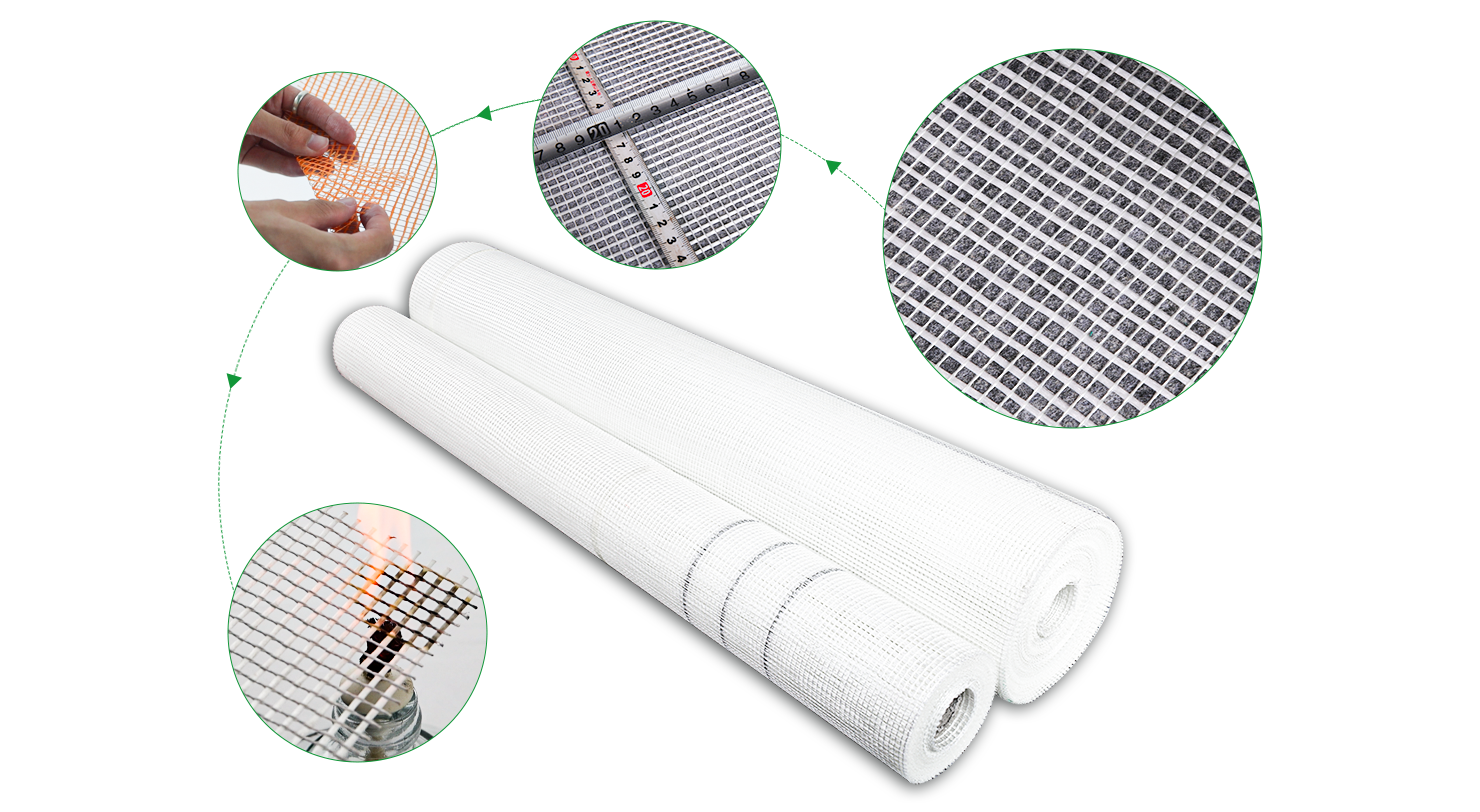
Fiberglass Mesh Gains Global Traction as the Backbone of Modern Construction and Plastering
In an era where building longevity and structural integrity are paramount, one unassuming material is quietly revolutionizing the construction industry: fiberglass mesh. Often hidden beneath layers of plaster, stucco, or tile, this alkaline‑resistant mesh has transitioned from a niche reinforcement product to a standard specification on job sites worldwide. Architects, contractors, and DIY enthusiasts alike are recognizing fiberglass mesh not merely as an accessory, but as a critical component for crack prevention, impact resistance, and long‑term facade stability.
A Technical Workhorse with Proven Reliability
Fiberglass mesh is woven from continuous filament fiberglass yarns, then coated with an acrylic or latex adhesive to withstand the highly alkaline environment of cement and mortar. The mesh is available in various weights and opening sizes, allowing specifiers to match the reinforcement level to the specific application. Higher‑density variants are typically specified for external thermal insulation composite systems, while lighter meshes serve interior drywall joints and crack repairs.
The mechanism is straightforward yet effective: embedded within the plaster or adhesive layer, the mesh absorbs tensile stresses that would otherwise translate into visible cracks. This is particularly valuable over large surface areas, around door and window frames, and where different building materials meet. Independent testing shows that proper use of fiberglass mesh dramatically reduces crack formation compared to unreinforced render.
Market Momentum: From Residential Renovation to High‑Rise Cladding
Global demand for fiberglass mesh has accelerated steadily, driven by several converging trends. Energy‑efficient facade systems rely on reinforced base coats containing fiberglass mesh. The ongoing global renovation boom has seen homeowners invest in durable finishes that resist movement and weather stress. Meanwhile, many emerging economies are adopting stricter building codes that mandate reinforced plaster, especially in regions prone to ground movement or seismic activity.
“A few years ago, you would have had to explain to a builder why using mesh was worth the extra effort,” says a construction materials consultant based in Singapore. “Today, many tenders explicitly require fiberglass mesh for exterior plastering. It has become a baseline expectation for quality.”
Application Best Practices: Avoiding Common Pitfalls
Despite its rugged reputation, proper installation remains key. Industry experts advise:
-
Embed the mesh in the middle of the mortar layer, not near the surface. A common mistake is pressing mesh into a wet skim coat, which offers little structural benefit.
-
Overlap joints substantially when using multiple sheets, and double‑layer mesh at corners and stress points.
-
Use genuine alkaline‑resistant coating—cheap, non‑coated glass fiber can degrade quickly when embedded in high‑pH cement.
The Future: Lighter, Stronger, Smarter
Manufacturers are now developing innovative hybrid meshes with embedded capabilities to monitor micro‑cracking in real time, as well as more environmentally friendly binders to reduce overall impact. Meanwhile, higher tensile strength variants are entering the prefabricated concrete element market, blurring the line between simple reinforcement and structural fabric.
As construction costs rise and material standards tighten, fiberglass mesh stands out as a low‑cost, high‑return investment. It may never be as glamorous as polished concrete or glass curtain walls, but behind the scenes, this woven grid continues to hold the world’s buildings together—one square meter at a time.
Fiberglass mesh,Crack prevention,Alkaline-resistant,Plaster reinforcement,Facade stability,External thermal insulation,Building codes,Mortar layer
Related news



We produce building materials with glass fiber as the main product.Production headquarters is located in Xiongan New District.


Contact
Room 209, Building S6, 001 Baojing Road North, xiongxian, Baoding, Hebei

Learn more