Welcome To Hebei Xiongan Hengyun Technology Co., Ltd.
 Esperanto
 Shqiptare
 Euskara
 Zulu
 Latinus
 Cymraeg
 தமிழ்
 Slovak
 Slovak
 Afrikaans



7628 Electronic Fiberglass Cloth: The Unsung Hero of Advanced PCB Manufacturing Sees Surge in Global Demand
2026-05-08
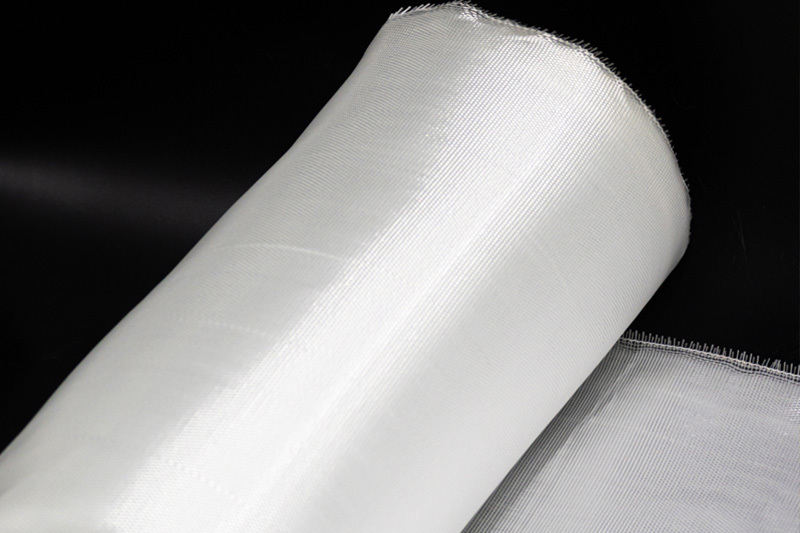
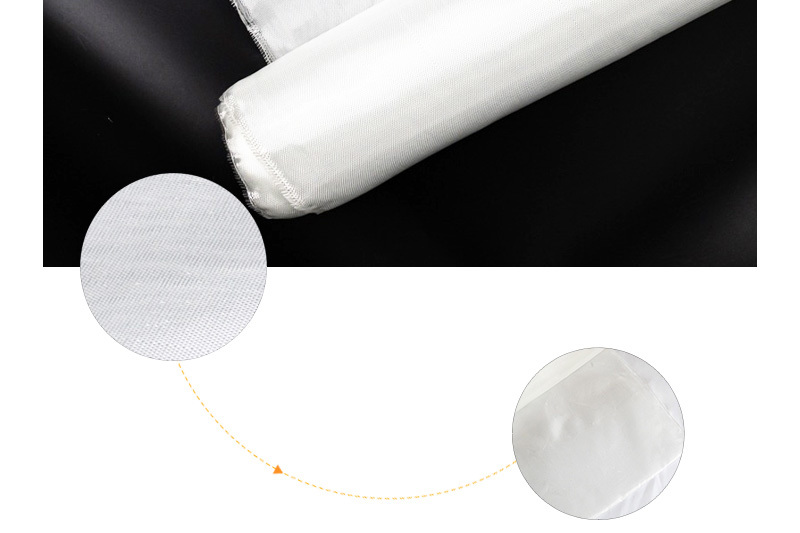
What Is 7628 Electronic Fiberglass Cloth?
7628 is a specific style of woven fiberglass fabric designed for high-performance electronic applications. Its key specifications include:
-
Thickness: Typically 0.173 mm to 0.203 mm
-
Weight: Approximately 203–210 g/m²
-
Weave Pattern: Plain weave using 5–6 warp and weft yarns per millimeter
-
Yarn Type: E-glass (electrical grade) with low dielectric constant
What sets the 7628 style apart is its balanced combination of mechanical strength, dimensional stability, and thermal resistance. It exhibits a tensile strength exceeding 300 N/25mm in both warp and fill directions and can withstand soldering temperatures above 260°C without significant deformation—critical for lead-free assembly processes.
Why Demand Is Accelerating
According to the newly released 2026 Global Electronic Glass Fabric Market Report, the 7628 grade currently accounts for over 34% of all electronic fiberglass cloth shipments by volume. Three mega-trends are fueling this growth:
-
AI Server PCBs: Advanced AI accelerators require ultra-flat, high-layer-count PCBs. 7628 cloth provides the low resin shrinkage and high dimensional stability needed for impedance control.
-
EV Power Electronics: With 800V battery systems becoming standard, PCB base materials must resist partial discharge. The dense weave of 7628 offers superior dielectric breakdown voltage (>40 kV/mm).
-
Miniaturization Paradox: While components shrink, PCBs are getting larger and more complex. 7628 cloth enables thinner laminates without sacrificing rigidity.
Technical Advantages Over Alternatives
Compared to lighter styles like 106 or 1080, 7628 offers lower resin absorption and better long-term thermal reliability. It also exhibits less yarn “swimming” during lamination, resulting in smoother surfaces for fine-line circuitry (25 µm line/space is achievable).
“For high-reliability applications such as aerospace avionics or medical imaging equipment, 7628 is often the baseline standard, not an option,” says Dr. Helena Voss, materials scientist at a leading CCL manufacturer in Taiwan. “Its weave symmetry minimizes warp-weft skew, which remains a hidden cause of signal integrity failures in high-speed digital designs.”
Supply Chain & Regional Dynamics
China currently produces over 65% of the world’s electronic fiberglass cloth, followed by Taiwan (15%) and Japan (12%). However, recent export controls on advanced PCB materials have prompted South Korean and German buyers to diversify sources. Major producers like Nittobo (Japan), Taishan Fiberglass (China), and Owens Corning (US) have all announced capacity expansions for 7628-specific looms in 2025–2027.
Sustainability Considerations
The industry is also seeing pressure to reduce process emissions. Traditional fiberglass weaving uses starch-based sizing that requires heat cleaning. New “low-VOC” sizing chemistries for 7628-grade cloth are entering pilot production, cutting energy use by up to 18% during the de-sizing stage.
Outlook
Market analysts project a compound annual growth rate (CAGR) of 6.8% for 7628 Electronic Fiberglass Cloth through 2030, outpacing the broader electronic fabric market. As PCB designers push for lower loss tangents (Df < 0.008 at 10 GHz) and higher glass transition temperatures (Tg > 180°C for lead-free processes), the humble 7628 cloth will remain an indispensable engineering material—quietly, yet fundamentally, enabling the digital age.
*For technical specifications or sourcing inquiries, global buyers are advised to request material test reports (including resin reactivity and surface cleanliness) meeting IPC-4412B standards.*
7628 электронная стеклоткань,печатные платы (ПП),фольгированные диэлектрики,размерная стабильность,напряжение пробоя диэлектрика,7628 electronic fiberglass cloth,printed circuit boards (PCBs)
Related news



We produce building materials with glass fiber as the main product.Production headquarters is located in Xiongan New District.


Contact
Room 209, Building S6, 001 Baojing Road North, xiongxian, Baoding, Hebei

Learn more