Welcome To Hebei Xiongan Hengyun Technology Co., Ltd.
 Esperanto
 Shqiptare
 Euskara
 Zulu
 Latinus
 Cymraeg
 தமிழ்
 Slovak
 Slovak
 Afrikaans



Beyond the Silicon: How 7628 Electronic Fiberglass Cloth Forms the Hidden Backbone of Modern Electronics
2026-05-06
By Industry Correspondent
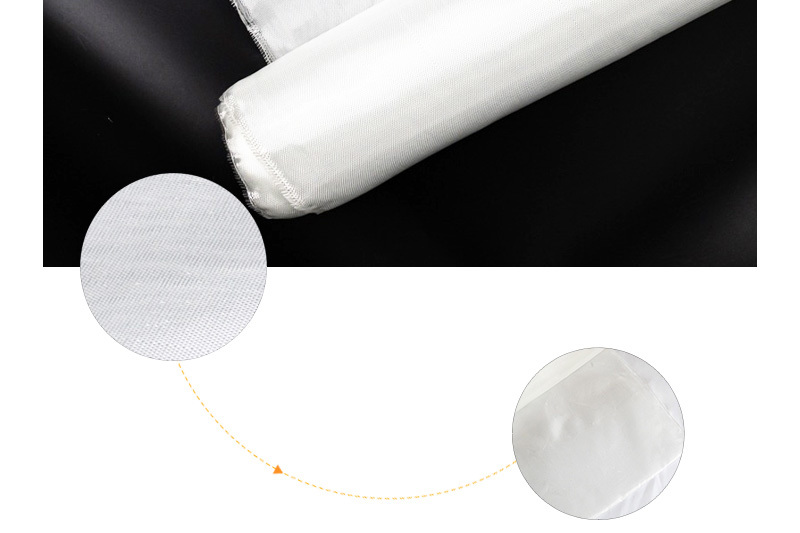
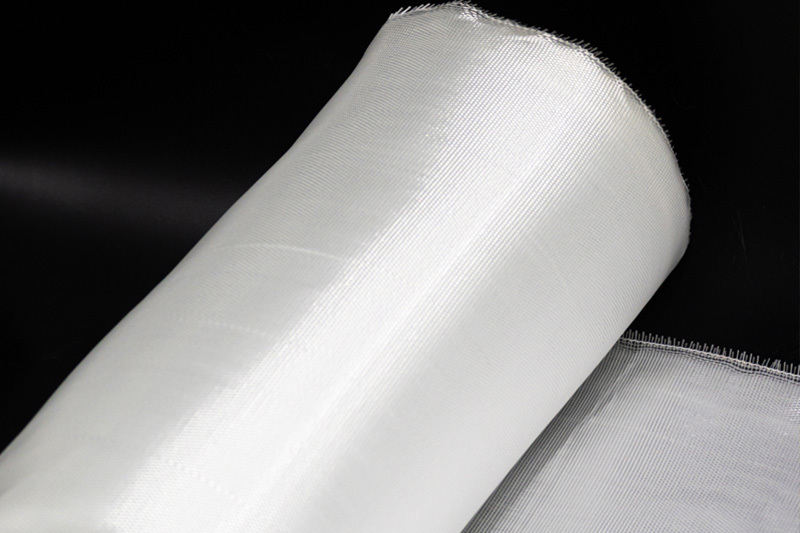
In the race to make electronic devices faster, smaller, and more powerful, most attention falls on microchips and software. Yet, hidden beneath the surface of every critical circuit board lies an unsung hero: 7628 Electronic Fiberglass Cloth. As a standard reinforcement material for copper-clad laminates (CCL), this specific fabric style has become indispensable in the production of high-reliability printed circuit boards (PCBs).
What Exactly is 7628 Cloth?
7628 is a defined style of electrical-grade (E-glass) fiberglass fabric. Within the electronics industry, it is known for its plain weave pattern, balanced construction, and consistent thickness. Made from continuous filament glass fibers, it possesses a unique set of properties: excellent dimensional stability, high tensile strength, low moisture absorption, and outstanding heat resistance.
These characteristics make it the preferred reinforcement for multilayer PCBs used in demanding applications such as server backplanes, automotive control units, industrial power supplies, and 5G infrastructure equipment. Where many lighter fabrics prioritize thinness, 7628 provides a robust balance of rigidity and electrical performance.
Why 7628 Matters in PCB Manufacturing
When manufacturers produce a PCB, the core material must withstand intense thermal and mechanical stress. The soldering process, especially lead-free soldering which requires higher temperatures, pushes materials to their limit. This is where 7628 cloth excels.
Compared to thinner fabric styles like 106 or 1080, 7628 offers superior flatness and reduced warp and twist in larger panels. Its thicker, denser weave provides better dimensional control after lamination, meaning that circuit traces remain precisely where they are designed to be. For high-layer-count boards—those with ten or more layers—this consistency is not just an advantage; it is a necessity.
The Growing Demand for Reliability
As vehicles become more electronic and industrial automation spreads, the need for PCBs that can endure vibration, temperature swings, and long-term operation has grown significantly. 7628 electronic fiberglass cloth helps meet these demands by providing a stable mechanical foundation. It reduces the risk of delamination (layer separation) and ensures that signal integrity is maintained even under continuous heavy loads.
Furthermore, as designs move toward thicker copper traces for power distribution, 7628 remains a go-to choice because it can handle the added stress without losing its shape or insulating properties.
A Quiet but Critical Role
While consumers may never see the 7628 fabric inside their vehicle’s controller or a base station, its role is foundational. It does not process data or store memory, but without its consistent performance, those chips would have no stable platform on which to operate. For engineers and PCB designers, specifying 7628 electronic fiberglass cloth is a proven decision—one that prioritizes long-term reliability over fleeting trends.
In an industry driven by the next big thing, 7628 proves that sometimes, the most important innovations are the ones that simply work, every time, without fail.
7628 электронное стеклоткань,Армирование печатных плат,Размерная стабильность,Термостойкость / Жаростойкость,Многослойные платы,7628 electronic fiberglass cloth,PCB reinforcement
Related news



We produce building materials with glass fiber as the main product.Production headquarters is located in Xiongan New District.


Contact
Room 209, Building S6, 001 Baojing Road North, xiongxian, Baoding, Hebei

Learn more