Welcome To Hebei Xiongan Hengyun Technology Co., Ltd.
language
English
العربية
বাংলাদেশ
Български
Hrvatski
Česky
Dansk
Nederland
 Esperanto
Slovenski
Filipino
Suomi
Français
Maori
 Shqiptare
Georgian
 Euskara
Deutsch
Ελλάδα
ישראל
इंडिया
Magyarország
Ísland
Indonesia
Irlanda
Italia
日本語
Sovensko
Հայաստան
한국
Kyrgyz
ປະເທດລາວ
 Zulu
Latvian
Lithuanian
Luxembourgish
 Latinus
Macedonian
Малайская
Maltese
Монгол улс
 Cymraeg
ဗမာ
 தமிழ்
नेपाल
Norge
ایران
Polska
Portugal
România
Российская
Србија
 Slovak
Србија
 Slovak
Bosanski
Slovenian
Беларус
España
Sverige
Точик
ประเทศไทย
Türk
Azərbaycan
Uzbek
 Afrikaans
Việt Nam



"Unlock the Hidden Potential of Glass Fiber Mesh Cloth: A Comprehensive Guide"
2025-02-11
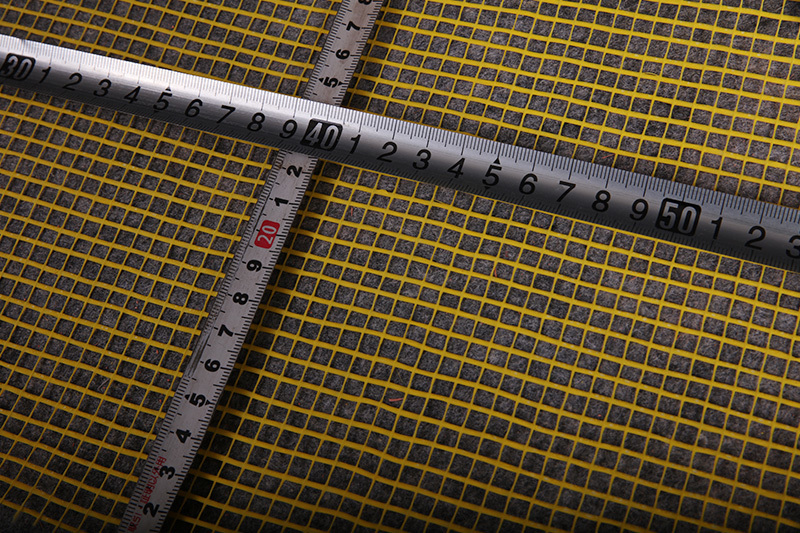
Fiberglass mesh fabric has high strength, alkali resistance, flexibility, corrosion resistance, fire protection and other characteristics. It is widely used in new inorganic non-metallic materials in construction, industry, horticulture and other fields. Rewrite, copy
Definition
Fiberglass mesh fabric is made from medium-alkali or alkali-free glass fiber yarn as raw material. It is woven into a network structure through a special process and then made into an excellent reinforcing material through surface coating treatment. It is widely used in multiple fields such as construction, industry, and agriculture, playing important roles such as reinforcement, protection, and strengthening.
Structure
- Fiber substrate: As the main load-bearing part, it is interwoven from glass fiber yarns, providing good strength and stability.
- Coating: Coated on the surface of the fiber substrate, the main function is to protect the fiber from external environmental erosion and enhance its bonding properties with other materials. Common coating materials include acrylate, silicone, etc.
Production process
- Wire drawing: After melting the glass raw material at high temperature, it is drawn into glass fiber monofilament through a special leakage plate.
- Warping: Arrange and wind multiple glass fiber monofilaments into a warp shaft according to a certain rule to prepare for subsequent weaving.
- Weaving: Use a loom to interweave warp and weft yarns into a grid-like blank according to a specific organizational structure.
- Coating: The blank is passed through the coating equipment, and a protective coating is evenly applied on its surface. After drying and curing, the final glass fiber mesh is formed.
Performance characteristics
- High Strength: The glass fiber itself has a high tensile strength, which makes the mesh cloth can withstand a large tensile force in the warp and weft directions, is not easy to break, and can effectively enhance the mechanical properties of the reinforced material.
- Chemical Corrosion Resistance: It has good resistance to acid, alkali and other chemical substances, and can still maintain stable performance in harsh chemical environments, prolonging the service life.
- Dimensional Stability: Under different temperature and humidity conditions, the size change of the glass fiber mesh cloth is extremely small, which can ensure that there will be no deformation, shrinkage and other problems during long-term use.
- Fire Resistance: Glass fiber belongs to non-combustible materials, so the glass fiber mesh cloth has good fire resistance, which can effectively improve the fire safety of buildings.
- Good flexibility: Although glass fiber has high strength, it still has a certain degree of flexibility after being made into a mesh cloth, making it easy to perform bending, cutting, and other operations during construction, and to adapt to various complex shapes and construction environments.
Classification
- Medium alkali glass fiber mesh cloth: The alkali metal oxide content is between 11.5% -12.5%, and the price is relatively low. It is suitable for some ordinary construction and industrial applications that do not require high alkali resistance
- Non-alkali glass fiber mesh cloth: The alkali metal oxide content is less than 0.8%, which has better chemical resistance and electrical insulation. It is often used in occasions with high performance requirements, such as external wall insulation, electronic appliances and other fields
- Building mesh cloth: It is mainly used for internal and external wall insulation, waterproofing, crack resistance and other projects of buildings to enhance the strength and stability of wall materials and prevent cracks on the wall.
- Industrial mesh cloth: In the industrial field, it is used for pipe dressing, equipment corrosion protection, composite material reinforcement, etc., to meet the needs of different industrial environments.
- Agricultural mesh cloth: such as the protection of vegetable greenhouses, insect nets, etc., play a role in protecting crops and preventing the invasion of pests and diseases.
Application field
- Exterior wall insulation system: It is an indispensable material in external wall insulation engineering. It is used in combination with insulation board, plastering mortar, etc., to enhance the strength and crack resistance of the insulation system, and improve the thermal insulation effect and service life. Interior wall decoration: It can be used for wall base treatment to prevent cracks in the wall, improve the flatness and aesthetics of the wall, and at the same time, it can also enhance the strength of the wall.
- Anti-corrosion of chemical equipment: It is used to wrap chemical equipment, pipelines, etc., to prevent the corrosion of chemical substances on the equipment and prolong the service life of the equipment.
- Composite material manufacturing: As a reinforcing material, it is combined with resin and other matrix materials to produce various high-performance composite materials, such as fiberglass products, auto parts, etc., to improve the strength and stiffness of the material.
- Greenhouse: It is used for the coverage and protection of greenhouses, which can not only play a certain role in heat preservation, but also prevent birds, insects and other damage to crops. Aquaculture: It can be made into a breeding cage with good water resistance and strength, providing a safe and reliable aquaculture environment.
Construction precautions
- Base treatment: Before construction, ensure that the surface of the base layer is flat, dry and clean, free of oil, dust and loose particles, so as to ensure the bonding between the mesh cloth and the base layer is firm.
- Cutting and laying: According to the size of the construction site, the mesh cloth should be reasonably cut. When laying, it should be flat and free of folds to ensure that the warp and weft direction of the mesh cloth is consistent with the construction requirements.
- Lap width: There should be enough lap width between the adjacent cloth of the mesh. Generally, the lap width is not less than 50mm to ensure the strength and integrity of the entire construction surface.
- Applying adhesive materials: When laying the mesh cloth, the adhesive materials, such as plastering mortar, should be evenly applied to ensure that the mesh cloth is completely covered to avoid leakage and hollowing.
External wall insulation system,dimensions and wall reinforcement,Good fire resistance,Strong corrosion resistance,Good flexibility,Good alkaline resistance,high strength
Related news



We produce building materials with glass fiber as the main product.Production headquarters is located in Xiongan New District.


Contact
Room 209, Building S6, 001 Baojing Road North, xiongxian, Baoding, Hebei

Learn more